Projects
Case studies with the actual problem, how it's architected, and what shipped — not just a screenshot and a tech-stack list.

ROI Spectrum
The Problem: SEO agencies and website owners lacked an integrated, multi-tenant solution to track ROI, audit logs, service tracking, and automated subscription billing transparently.
The Architecture: Multi-tenant database schema architecture using Node.js/Express backend, React.js frontend, and hybrid storage using PostgreSQL for relational billing data and MongoDB for audit logs.
The Results: Launched at roispectrum.com and running in production since, with query response times cut by 30% through composite indexing and subscription billing fully automated end to end.

Forklift CRM
The Problem: Operations managers struggled to handle lead assignments, track workflow automations, and manage sales representatives with clean role-based permissions.
The Architecture: Full stack architecture with an Express.js REST API using MongoDB for dynamic lead schemas and Next.js/React frontend with complex dashboard states.
The Results: Deployed a CRM system that streamlined lead workflow automation, eliminated manual assignment delays, and handled real-time updates via WebSockets with zero downtime.

High-Throughput API Gateway
The Problem: Microservices suffered from erratic traffic spikes, lack of centralized token validation, and rate-limiting issues that degraded downstream systems.
The Architecture: Custom proxy server built with Node.js, Express, and Redis Cluster, acting as a reverse proxy, rate limiter, and JWT authenticator.
The Results: Centralized routing for 5 microservices, maintaining sub-10ms response latencies while shielding database clusters from denial-of-service traffic.
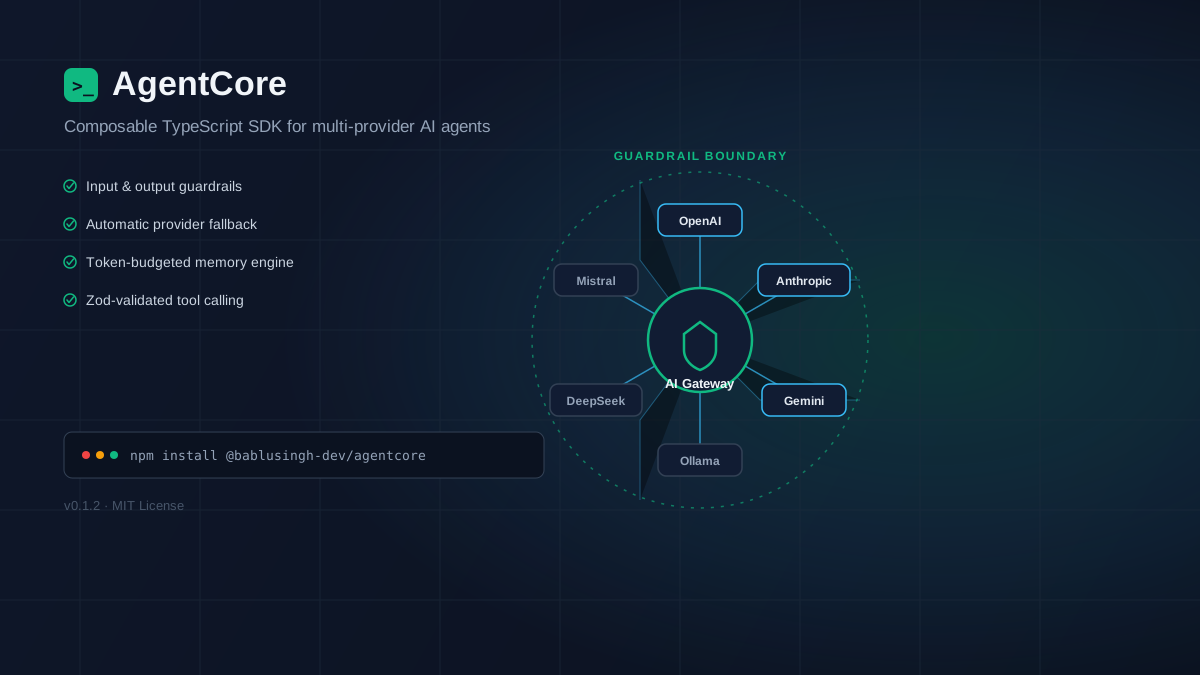
AgentCore
The Problem: Every LLM provider ships its own SDK, message format, and streaming API, so switching models, or falling back to a second provider when one is rate-limited, usually means rewriting the integration layer.
The Architecture: A TypeScript SDK with decoupled primitives: universal model adapters normalize OpenAI, Anthropic, Gemini, Ollama, DeepSeek, Mistral, and Grok into one request/response shape, sitting behind an AI gateway that handles routing, retries, and fallback. A memory engine manages context windows (sliding window, token budget, summary) with pluggable persistence and Mem0/vector adapters, and a guardrails layer validates schemas and filters input/output before anything reaches a tool or the caller.
The Results: Published as @bablusingh-dev/agentcore on npm with a live docs site and interactive pipeline simulator at agentcore.bablusingh.in.
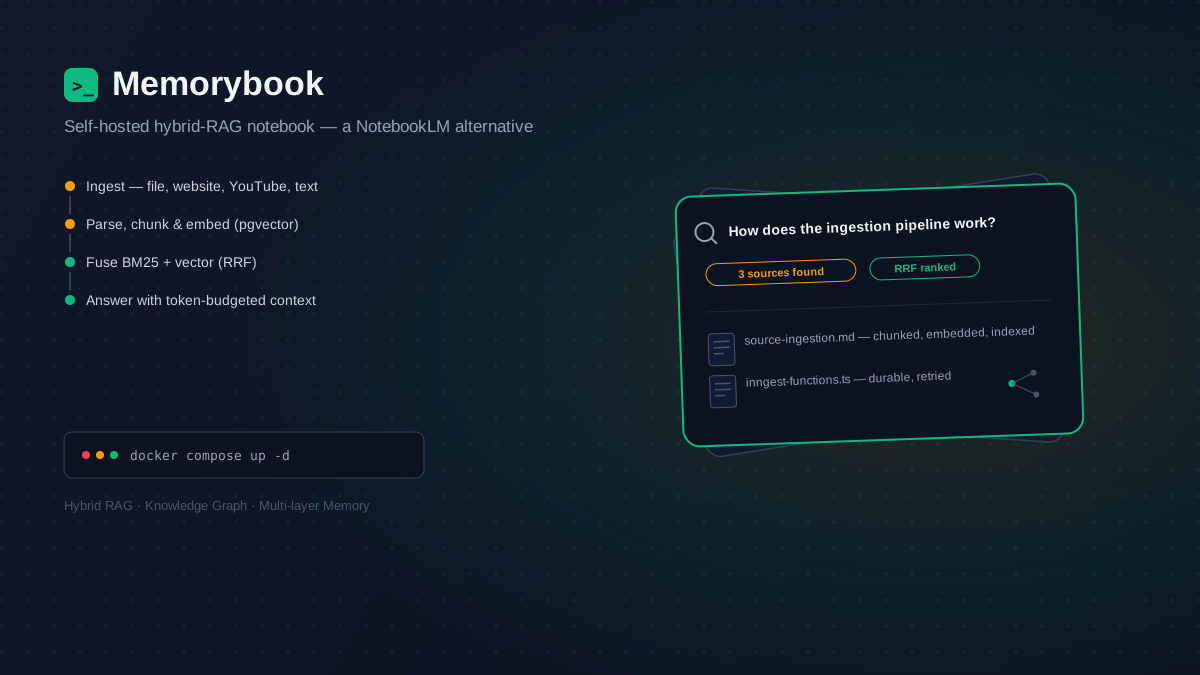
Memorybook
The Problem: Tools like NotebookLM are useful for asking questions over your own documents, but they are closed products, no self-hosted option, no visibility into how retrieval or memory decisions actually get made.
The Architecture: A full-stack hybrid-RAG app: an Express + TypeScript API with Drizzle ORM over ParadeDB (Postgres with BM25 full-text search and pgvector for embeddings), a self-hosted Inngest pipeline for durable background jobs (ingestion, knowledge-graph extraction, memory extraction), Neo4j for a knowledge-graph layer, and a Next.js App Router client.
The Results: A working hybrid-RAG pipeline with multi-layer memory, conversation history, user profile/semantic/episodic/procedural memory, a Neo4j knowledge graph, and document retrieval, coordinated per chat turn against a token budget so context never silently overflows the model.